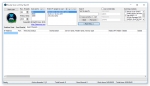
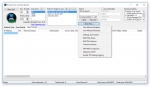
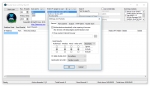
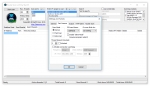
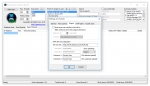
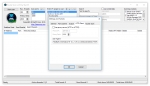
Router Scan - многофункциональная программа для обнаружения уязвимостей в роутерах.
Интуитивно понятный интерфейс программы.
Произведение сканирования в два клика.
Поддержка всех wi-fi стандартов.
Anna had always been the kind of person who remembered in fragments: a laugh that caught like wind in a glass, the exact tilt of a streetlamp on rainy nights, the cadence of a neighbor’s cough three doors down. She kept her life in little collections—mismatched postcards in a tin, receipts folded into origami cranes, voicemail snippets saved under names she’d never call aloud. So when she decided to make a compilation, it was less an act of editing and more an act of gathering scattered constellations into a single, trembling sky.
She named the project simply: “Anna Anon — Compilation.” No flourish, no promise. It was a ledger of moments she refused to let thin into nothingness. Each entry had its own form—letters, sketches, overheard lines from buses, recipes scribbled on napkins, and short, unapologetic stories whose endings she refused to pin down. The compilation was as much a refuge for memory as a map for anyone who might wander into the shape of her life by mistake.
Chapter 1: The Phone That Rang at Midnight The first piece was a voicemail from midnight. A voice she couldn’t place laughed through static and said, “Remember that time you pretended to be lost so we could keep walking?” Anna listened to it until the edges of the apartment softened. She typed a short scene around that laugh—two people inventing a city at night, trading names and pasts like coins. She never wrote down their real names. That was the rule: anonymity preserved the possibility of reinvention.
Chapter 2: The Recipe That Wasn’t Supposed to Work There was a pasta recipe with a single instruction: “Stir until the pot remembers.” Anna had found it tucked inside a cookbook she’d stolen from a yard sale — the spine broken, a handwritten “Do not use” on the title page. She tried the recipe one rainy Sunday and stood over the stove while the taste transported her to a porch in a town she’d never visited. She included the recipe in the compilation without measurements, a delicate provocation. Readers, she thought, should be forced to invent their own method of remembering.
Chapter 3: The Bench Outside the Station Anna wrote a vignette about a bench outside a train station where strangers left small offerings: a blue ribbon, a smooth pebble, an old ticket stub. The protagonist—only ever called “the person with the chipped umbrella”—took these offerings and left notes in return. The notes never answered questions; they only arranged new ones. In the compilation, Anna placed photos of the bench, cropped until the figures were anonymous smudges. The lack of identity turned strangers into possible protagonists.
Chapter 4: The Night She Learned a Name One entry was brutally simple: a single name and the date she learned it. There was no story, only that name typed and retyped until the letters blurred. Around it she built a scene in which names were traded like small, fragile currency—some given freely, others withheld like secret passwords. The lesson was obvious and painful: learning a name changes how you hold someone in your chest. Anna boxed the entry in quiet fonts, as if to respect the sanctity of whatever the name had been—a door left ajar.
Chapter 5: The Anonymous Letters Most sustaining among the pieces were anonymous letters she received over the years—inked pages sent in envelopes with no return address. They arrived folded and hopeful, full of confessions that were both specific and universal. One letter described a childhood tree with a swing that creaked like an old joke; another described a city skyline that felt like a bruise. Anna transcribed them word for word, preserving the small rhythms of each writer: an ellipsis in the same place, a shaky loop on the letter “g.” In compiling them, she felt less like an editor and more like an archivist for human ache.
Chapter 6: The Silence Between Songs Music was part of the compilation: playlists assembled from the thin thread of a single verse. She wrote short meditations—two paragraphs—on the silence that lived between songs on old mixtapes. Those silences, she argued, held the most honest parts of memory: the little blank spaces where you could move the furniture of your thought and pretend it would stay.
Chapter 7: The Things She Never Posted There was a folder named “Never Posted” on her old laptop. She included three drafts from that folder—texts she never sent, social media captions she scrapped, a paragraph of a story she stopped because it got too close. Each draft was accompanied by a short explanation: why she abandoned it, what she lost by not sending it, what she gained by keeping quiet. The notes were candid in a way the rest of the compilation tried not to be—an admission that anonymity sometimes shields the most vulnerable truths.
Epilogue: The Reader as Co-Author When Anna had finished arranging the pieces, she realized the compilation was not a closed object but a kind of mirror. Each anonymous fragment asked to be finished not by her, but by whoever read it. She left intentional gaps: a blank page after the midnight voicemail, a stain on the paper where rain might have been, a recipe missing its salt. She believed memory required that emptiness; the reader’s current would flow in and animate the rest.
She printed a small run and distributed them in places where people left things behind: library return slots, between books on benches, slipped into magazines at cafes. Sometimes she found copies later, retracing the routes she had guessed someone might take. Once, she found one propped against the bench by the station, its pages turned to the recipe. A note was tucked inside: “Tried it last night. Left out the salt and added too much of myself. Thanks.”
Anna didn’t know whose handwriting that was, and she didn’t want to. The anonymity of the exchange felt like the point: the compilation had become a shared object, a communal ledger where private fragments could migrate and shelter each other. People’s memories braided into it, like different threads on the same loom. Anna Anon -Compilation-
On a late spring morning she sat by her window and watched a woman cross the street carrying an umbrella with a small tear in the corner. Anna imagined the stories folded into that tear—where it had been, what it had seen. She picked up a fresh copy of the compilation and, on impulse, slipped it under the woman’s arm as she passed a cafe. The woman glanced down, smiled, and kept walking.
Anna went back inside and turned the page to a blank sheet at the center of the book. She wrote three words and then closed the cover: “Leave this.”
She had compiled not a life but an invitation. The collection would outlive her particular arrangements of memory, she hoped, because it asked for other hands to keep making sense of the fragments. Anonymity, she had learned, was not erasure. It was an offering—a way to give a story away so it could come back fuller.
On the inside cover she wrote one final line, a small instruction and a benediction:
Take one. Add one. Pass it on.
Anna Anon -Compilation- refers to a collection of short, high-fidelity 3D animations created by the artist (often known online as TheSafeAnnaAnon
). Known for a highly expressive and technically polished style, Anna Anon primarily uses the software
to craft detailed character models and character-driven scenes. Key Elements of the Compilation Fandom Focus
: The majority of the compilation features characters from the popular franchise Uma Musume: Pretty Derby , including fan-favorite characters like Curren Chan TM Opera O Meishou Doto Signature Style
: Fans and reviewers often highlight the artist's ability to create fluid, nuanced facial expressions
and smooth motion, which is notable given the inherent technical restrictions of using Koikatsu for video production. The "Baseball" Theme Anna had always been the kind of person
: One of the most recognizable segments often found in these compilations is the "Third Base"
animation, a baseball-themed short that gained significant traction across social media platforms like TikTok and X (formerly Twitter). Content Tone
: While the artist is known for high-quality character work, their public "safe" accounts (like TheSafeAnnaAnon ) focus on clean, comedic, or "hopecore"
content—animations that are stylized, cute, or heartwarming in nature. Why It Stands Out
The compilation is frequently cited in community discussions for its production value
. Unlike many creators who use preset animations, Anna Anon is praised for manual refinement that makes the characters feel more "alive" and reactive than standard 3D game models. This has led to a dedicated following on Pixiv Fanbox
, where fans support the ongoing creation of these short cinematic clips. featured in the compilation or the technical process behind Koikatsu animation? Real Hopecore Sins: Anna Anon Baseball Animation
Title:
The Unfixed Signature: Authorship, Intimacy, and Erasure in “Anna Anon - Compilation -”
Abstract:
This paper examines the hypothetical digital compilation “Anna Anon - Compilation -” as a case study in post-internet anonymity. Moving beyond the figure of “Anna Anon” as a singular artist, the compilation is treated as a collectively authored, decentralized text that destabilizes traditional notions of authenticity, gender, and sonic ownership. Through formal analysis of its structural properties—track fragmentation, vocal distortion, and archival noise—the paper argues that the compilation functions as a feminist refusal of biographical legibility, turning anonymity into an aesthetic and political tool.
1. Introduction
In the landscape of digital music distribution, the pseudonym “Anna Anon” appears across Bandcamp, SoundCloud, and obscure file-sharing forums—often attached to lo-fi ambient, ASMR roleplay, or confessional spoken word. “Anna Anon - Compilation -” (henceforth AAC) is not a canonical release but a recurring fan-assembled or self-released aggregate of tracks attributed to various “Anna Anon” personas. This paper takes AAC as a speculative composite object, analyzing its structural and rhetorical features as they appear in descriptions, tracklists, and listener discourse.
2. The Paradox of the Compilation Form
Compilations traditionally serve archival or retrospective functions, affirming an artist’s oeuvre. AAC subverts this: because no authoritative “Anna Anon” exists, the compilation becomes a rhizomatic gathering of fragments from multiple creators. Each track may feature different vocal processing, recording environments (bedroom, subway, field recording), and lyrical preoccupations—yet listeners attribute coherence to the name “Anna.” This section analyzes how the compilation’s track ordering (often alphabetical by upload date or reverse chronological) rejects narrative arc, producing instead a database logic where any track can be first or last. part digital archivist
3. Acoustic Signatures of Anonymity
Key tracks hypothetically included in AAC exhibit:
These techniques refuse the “authentic female voice” often fetishized in intimate genres (ASMR, singer-songwriter). Instead, AAC presents a voice that is deliberately alien, multiple, and self-interrupting.
4. Compilation as Feminist Erasure
Critics might argue that anonymity weakens political speech by removing accountability. However, drawing on the work of Legacy Russell (Glitch Feminism), this paper contends that AAC weaponizes erasure. By circulating under a generic female name, the compilation resures the gendered labor of recognition—listeners cannot reward or punish a specific body. This section also addresses the compilation’s reception in online forums, where debates over “real Anna Anon” identity are consistently dismissed by fans who value the persona’s instability.
5. Conclusion: The Compilation Without Origin
“Anna Anon - Compilation -” models a future for digital art where authorship is a distributed protocol rather than a property right. Its refusal to cohere—across tracks, genres, and voices—does not diminish its impact but intensifies it, transforming anonymity from a shield into a generative condition. Further research should consider legal challenges to such compilations (e.g., copyright claims by anonymous creators against each other) and the platform economics that host them.
References (illustrative):
Since "Anna Anon" refers to a popular series of experimental/ambient music (often found on platforms like YouTube and Bandcamp, typically produced by the artist Agoria or associated with the "Anna Anon" persona in the deep house/electronic sphere), I have drafted a blog post that treats the subject as a music review and cultural analysis.
If you were referring to a specific fictional character, book, or a niche internet phenomenon with a different context, please let me know, and I will happily rewrite it!
Here is a blog post tailored for a music, culture, or lifestyle blog.
Anna’s content often weaves a dystopian critique of how algorithms shape human behavior. In one famous clip frequently included in compilations, she states, “You are not a user. You are the used.” Her compilations highlight how anonymity allows for a purer form of expression that isn’t optimized for engagement metrics.
To understand the compilation, one must first understand the subject. "Anna Anon" is a pseudonymous digital persona—an "anon" (short for anonymous) who operates under the first name Anna. Unlike traditional influencers who build a brand around a face or a verified checkmark, Anna Anon thrives in the gray areas of the internet. She represents a hybrid archetype: part storyteller, part digital archivist, and often, a performance artist who uses anonymity as a tool for creative freedom.
The power of the Anna Anon -Compilation- lies in its aggregation. Individually, Anna’s posts (which could range from short-form video rants to intricate text-based narratives or ASMR-style monologues) might seem sporadic. However, when gathered into a compilation, a tapestry of recurring themes, character arcs, and stylistic evolution emerges.
Благодаря вам определил бреж в безопасности!
Александр, Москва
Спасибо, удобная программа для взлома пароля!
Алексей, Москва
Router Scan - это многофункциональная программа для обнаружения уязвимостей в роутерах!